Introduction
If you're still sleeping on Pinterest, you're leaving serious traffic on the table. While most marketers obsess over Instagram, TikTok, and LinkedIn, Pinterest quietly delivers some of the highest-converting referral traffic on the internet. In 2025, this visual search engine has evolved into something even more powerful: a traffic goldmine supercharged by AI automation.
With over 498 million monthly active users (Statista, 2025) and 85% of users making purchases based on pins from brands, Pinterest offers unmatched opportunities for businesses ready to leverage its unique advantages. The game-changer? AI automation tools that eliminate the tedious manual work while multiplying your results. This article reveals how you can harness Pinterest in 2025: The Underrated Traffic Goldmine Powered by AI Automation to drive qualified traffic, increase conversions, and outpace your competition.
Why Pinterest Remains Underrated Despite Massive Potential
Most marketers underestimate Pinterest because they treat it like social media—but it's not. Pinterest functions as a visual search engine where users actively hunt for solutions, products, and inspiration. Unlike scrolling through Instagram, Pinterest users have purchase intent baked into their behavior.
Consider these compelling statistics: Pinterest drives 33% more referral traffic to shopping sites than Facebook (Shopify, 2025). The average order value from Pinterest referrals is $50, compared to $40 from Facebook and $35 from Twitter. Yet only 28% of marketers include Pinterest in their strategy (HubSpot, 2025).
Why the disconnect? Most businesses find Pinterest time-consuming and struggle to create enough content consistently. They don't understand the platform's unique algorithm or how to optimize for Pinterest's visual search. This is precisely where AI automation becomes your competitive advantage.
How AI Automation Transforms Pinterest Marketing in 2025
AI automation has revolutionized Pinterest marketing by solving its biggest challenges: content creation, scheduling consistency, keyword optimization, and performance analysis. Let's break down the specific ways AI enhances your Pinterest strategy.
Content Creation at Scale: AI-powered tools like Canva's Magic Design and Adobe Firefly can generate dozens of pin variations from a single product image or blog post. These tools analyze top-performing pins in your niche and automatically create designs that match winning patterns. You input your brand colors, fonts, and core message—AI handles the rest.
Smart Scheduling and Distribution: Tools like Tailwind (now with AI-powered SmartSchedule) analyze when your specific audience is most active and automatically post pins at optimal times. The AI learns from your account's performance data, continuously refining its posting schedule to maximize engagement and reach.
Keyword Optimization: AI platforms now scrape Pinterest's search data to identify trending keywords and optimize your pin descriptions automatically. They analyze competitor pins, extract high-performing keyword patterns, and suggest titles and descriptions that align with what users are actively searching for.
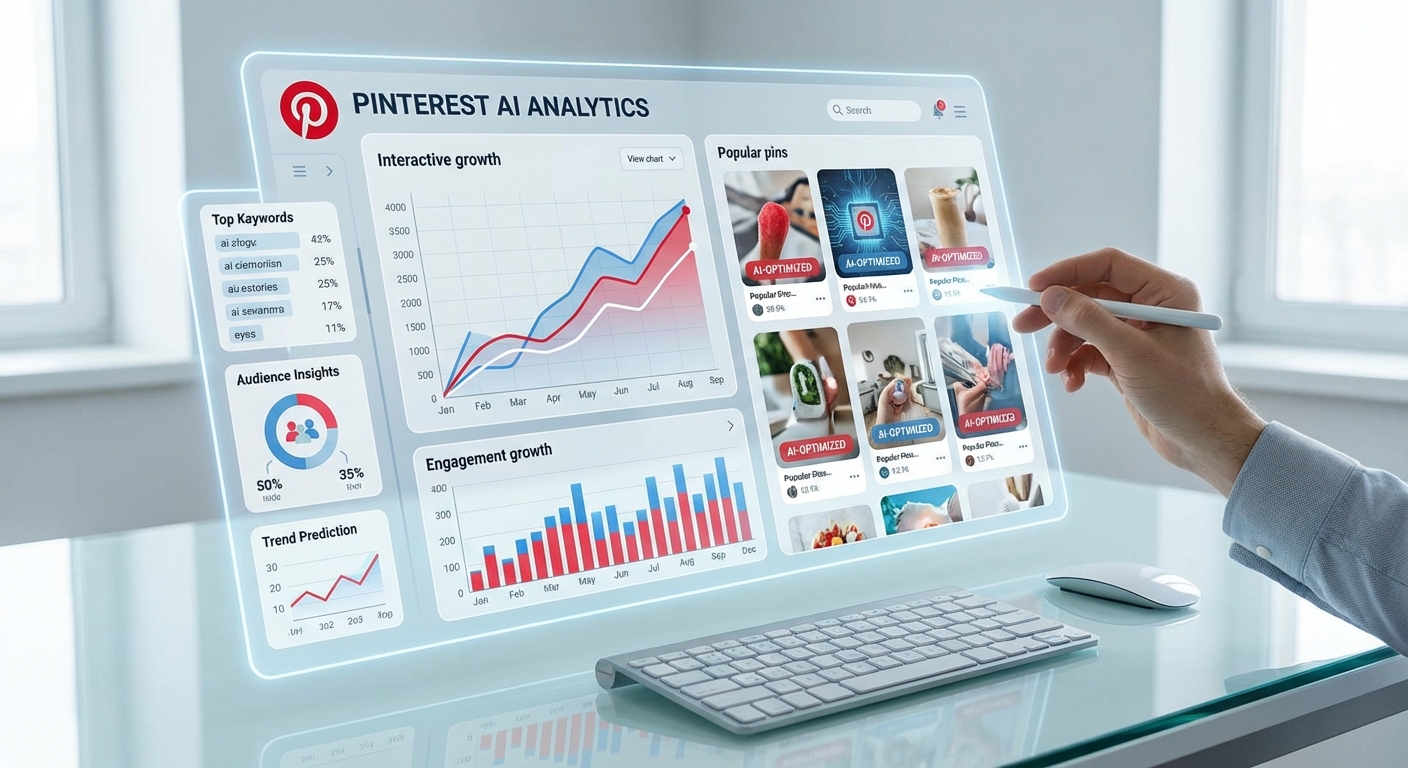
Performance Analytics and Predictive Insights: Advanced AI tools don't just report what happened—they predict what will happen. They identify which pin designs, topics, and posting times will likely generate the most traffic before you invest resources.
Essential AI Tools for Pinterest Automation in 2025
Selecting the right tools makes the difference between Pinterest frustration and Pinterest success. Here are the platforms delivering exceptional results in 2025:
Tailwind Create: This AI-powered design tool generates unlimited pin variations from your existing content. Upload a blog post URL, and Tailwind Create produces 10-20 professionally designed pins in seconds, each optimized for Pinterest's current best practices. Pricing starts at $19.99/month.
Pinterest Predis: This newer platform combines AI content creation with predictive analytics. It analyzes your niche, identifies content gaps, and automatically generates pins targeting underserved keywords. Users report 3-5x traffic increases within 90 days. Pricing: $29/month.
Hootsuite with OwlyWriter AI: For businesses managing multiple platforms, Hootsuite's AI writing assistant crafts Pinterest descriptions that incorporate trending keywords while maintaining brand voice. The bulk scheduling feature handles hundreds of pins monthly. Pricing: $99/month for comprehensive plans.
Canva Magic Studio: Beyond basic design, Canva's AI features include automatic translation for international audiences, brand kit application across designs, and AI-generated pin copy. The free version offers substantial functionality, while Pro ($12.99/month) unlocks advanced features.
PinClicks Analytics AI: This specialized tool uses machine learning to identify exactly which visual elements (colors, text placement, image style) drive the most clicks for your specific audience. It provides actionable recommendations like "increase text size by 15%" or "use lifestyle images instead of product shots." Pricing: $39/month.
Building Your AI-Powered Pinterest Strategy: Step-by-Step
Implementing AI automation effectively requires strategy, not just tools. Follow this framework to build a Pinterest presence that generates consistent, qualified traffic.
Step 1: Audit Your Content Assets
Begin by cataloging your existing blog posts, products, services, and resources. AI tools work best when fed quality source material. Create a spreadsheet listing each piece of content with its primary keyword, target audience, and conversion goal.
Step 2: Configure Your AI Tools
Don't just sign up and start posting. Properly configure your AI platforms with your brand guidelines, target keywords, and audience demographics. Train the AI by feeding it examples of pins you consider on-brand and high-quality. Most platforms offer onboarding workflows—complete them thoroughly.
Step 3: Create a Content Calendar
Even with automation, strategic planning matters. Map out monthly themes aligned with your business goals and seasonal trends. AI tools should execute your strategy, not create it randomly. Plan for 5-10 pins daily across different content categories: educational, inspirational, product-focused, and user-generated content.
Step 4: Generate and Schedule Pin Variations
Use your AI design tool to create 5-10 variations for each piece of content. Different designs appeal to different users, and Pinterest rewards fresh content. Schedule these variations to post over weeks or months, not all at once. The AI scheduler will optimize timing automatically.
Step 5: Optimize for Pinterest SEO
Pinterest's algorithm prioritizes relevant, keyword-rich content. Use AI keyword tools to research what your audience searches for. Include primary keywords in pin titles, descriptions, board names, and your profile bio. AI writing assistants can help craft descriptions that sound natural while incorporating 3-5 relevant keywords.
Step 6: Monitor, Analyze, and Iterate
Review your AI analytics dashboard weekly. Identify which pins drive the most traffic, saves, and clicks. Feed this data back into your AI tools so they learn your audience's preferences. Most AI platforms automatically adjust based on performance, but manual review ensures alignment with business goals.
Real-World Success Stories: AI-Powered Pinterest Wins
Theory is nice, but results matter. Here are documented case studies from businesses leveraging AI automation on Pinterest in 2025.
Case Study 1: E-commerce Home Decor Brand
A small home decor retailer implemented Tailwind Create and Pinterest Predis in January 2025. They automated pin creation for their 200-product catalog, generating 15 pin variations per product. Within four months, Pinterest became their second-largest traffic source (after Google), driving 47,000 monthly visitors and $89,000 in attributed revenue. Their investment: $49/month in tools plus 5 hours weekly for strategy oversight.
Case Study 2: B2B Marketing Consultant
A marketing consultant used AI automation to promote blog content on Pinterest, a platform she'd previously ignored. Using Canva Magic Studio and Hootsuite's AI scheduler, she created and distributed 25 pins weekly with just 90 minutes of weekly effort. Her blog traffic increased 214% in six months, with Pinterest delivering the highest time-on-site metrics (average 4:32 minutes vs. 2:15 from other sources). She converted 12 new consulting clients directly from Pinterest traffic.
Case Study 3: Online Course Creator
An educator selling courses on productivity automated her Pinterest presence using PinClicks Analytics AI to optimize pin designs. The AI identified that pins with bold numbers and specific outcomes ("5 Ways to Save 10 Hours Weekly") outperformed generic designs by 8x. By applying these insights across 500+ pins, she grew her Pinterest audience from 2,400 to 47,000 followers in eight months and doubled course enrollments.
Common Pitfalls and How to Avoid Them
AI automation is powerful, but misuse creates problems. Avoid these common mistakes:
Over-Automation Without Strategy: Tools don't replace thinking. AI should execute your strategy, not create it. Define clear goals, target audiences, and brand guidelines before automating. Random automated pinning wastes time and budget.
Ignoring Pinterest's Community Guidelines: Some AI tools generate spammy content or violate Pinterest's policies on repetitive pins. Always review AI-generated content before publishing. Pinterest penalizes accounts for spam, low-quality content, and policy violations.
Neglecting Original Content: AI excels at repurposing and optimizing, but Pinterest rewards original, valuable content. Balance AI-generated pins with authentic, brand-specific content that showcases your unique perspective.
Setting and Forgetting: AI automation isn't "set it and forget it." Pinterest's algorithm evolves, trends shift, and audience preferences change. Review performance monthly and adjust your AI tool settings accordingly.
Poor Quality Source Material: AI can't transform terrible content into gold. If your blog posts lack value or your product photos are low-quality, no amount of AI optimization will drive results. Invest in quality source material first.
The Future of Pinterest and AI: What's Coming
Pinterest continues investing heavily in AI capabilities, and several developments will reshape the platform in late 2025 and beyond.
AI-Powered Shopping Experiences: Pinterest is testing AI shopping assistants that help users find products through conversational queries. Brands that optimize their pins for these AI assistants will capture more purchase-intent traffic.
Automated Video Pin Creation: Video pins generate 3x more engagement than static images. New AI tools will automatically convert blog posts and products into engaging short-form video pins, making video accessible to businesses without video production skills.
Hyper-Personalization: Pinterest's algorithm will increasingly personalize results based on individual user behavior. AI automation tools will need to create diverse pin variations targeting micro-audiences within your broader market.
Voice Search Integration: As voice search grows, Pinterest is optimizing for conversational queries. AI tools will help brands optimize pin descriptions for how people actually speak, not just type.
Staying ahead means monitoring these trends and adapting your AI automation strategy as capabilities expand.
Measuring ROI: Metrics That Matter for Pinterest Traffic
You can't optimize what you don't measure. Track these key metrics to evaluate your AI-powered Pinterest performance:
Impressions and Reach: How many people see your pins? Growing impressions indicates your content resonates with Pinterest's algorithm and your target keywords are effective.
Click-Through Rate (CTR): What percentage of people who see your pins click through to your website? Average Pinterest CTR is 0.5-1%. Above 2% indicates excellent pin design and relevance.
Website Traffic from Pinterest: Use Google Analytics to track visitors, pages viewed, and time on site from Pinterest referrals. Set up UTM parameters in your pin URLs to track specific campaigns.
Conversion Rate: What percentage of Pinterest visitors complete desired actions (purchases, email signups, downloads)? Pinterest typically delivers higher-quality traffic than other social platforms, with average conversion rates of 3-5%.
Audience Growth: Track follower growth and engagement (saves, comments). While less critical than traffic and conversions, audience growth indicates brand awareness expansion.
Cost Per Acquisition: If you're investing in Pinterest Ads alongside organic efforts, calculate how much you spend to acquire each customer. Compare this to other channels to optimize your marketing budget allocation.
Most AI analytics tools automatically track these metrics and highlight trends, but understanding what they mean ensures you make smart strategic decisions.
Getting Started: Your 30-Day AI Pinterest Quickstart Plan
Ready to tap into Pinterest in 2025: The Underrated Traffic Goldmine Powered by AI Automation? Here's your action plan:
Week 1: Foundation
- Set up or optimize your Pinterest business account
- Install Pinterest Tag on your website for tracking
- Research and select 2-3 AI tools from the recommendations above
- Create 10-15 branded Pinterest boards organized by topic
- Conduct keyword research using Pinterest's search suggestions and AI tools
Week 2: Content Creation
- Identify your top 10 pieces of content (blog posts, products, resources)
- Use AI design tools to create 5-7 pin variations for each piece
- Write keyword-optimized descriptions using AI writing assistants
- Organize pins into appropriate boards
Week 3: Automation Setup
- Configure your AI scheduling tool with optimal posting times
- Schedule 30 days of pins (5-10 daily)
- Set up automated analytics reports
- Join 5-10 relevant group boards in your niche
Week 4: Monitor and Optimize
- Review analytics to identify top-performing pins
- Analyze which designs, topics, and keywords drive the most traffic
- Create more variations of high-performers
- Adjust your AI tool settings based on performance data
- Plan your content calendar for the next 30 days
After 30 days, you'll have established a sustainable, AI-powered Pinterest presence requiring just 3-5 hours weekly to maintain while generating increasing traffic month over month.
Conclusion: Your Next Steps to Pinterest Traffic Success
Pinterest in 2025 represents one of the most underutilized traffic opportunities available to businesses today. While your competitors chase diminishing returns on crowded platforms, you can build a sustainable traffic engine that works while you sleep.
AI automation eliminates the traditional barriers—time, design skills, and platform expertise—that kept businesses from succeeding on Pinterest. With the right tools and strategy, you can generate professional pins at scale, optimize for Pinterest's visual search algorithm, and drive qualified traffic that converts.
The businesses winning on Pinterest in 2025 aren't necessarily the biggest or most resourced. They're the ones who recognized the opportunity early, implemented smart AI automation, and committed to consistent execution.
Your Pinterest traffic goldmine awaits. The question is: will you claim it before your competitors do?
Ready to transform your Pinterest presence? Download our free Pinterest AI Automation Checklist, featuring tool comparisons, setup guides, and our proven 90-day traffic growth blueprint. Start driving qualified traffic from Pinterest's 498 million active users today.