Introduction
Imagine having an AI assistant that doesn't just read your text messages but actually sees the images you share, hears the nuances in your voice, and understands the complete context of your business challenges. That's the power of multimodal AI assistants, and they're revolutionizing how businesses interact with technology in 2025.
Unlike traditional AI tools that operate in silos—processing only text, only images, or only voice—multimodal AI assistants combine multiple input types simultaneously. This creates a more natural, human-like interaction that can dramatically improve your marketing efforts, customer service, and business operations. In this article, you'll discover what multimodal AI assistants are, how they work, and most importantly, how you can leverage them to gain a competitive edge in your market.
What Are Multimodal AI Assistants?
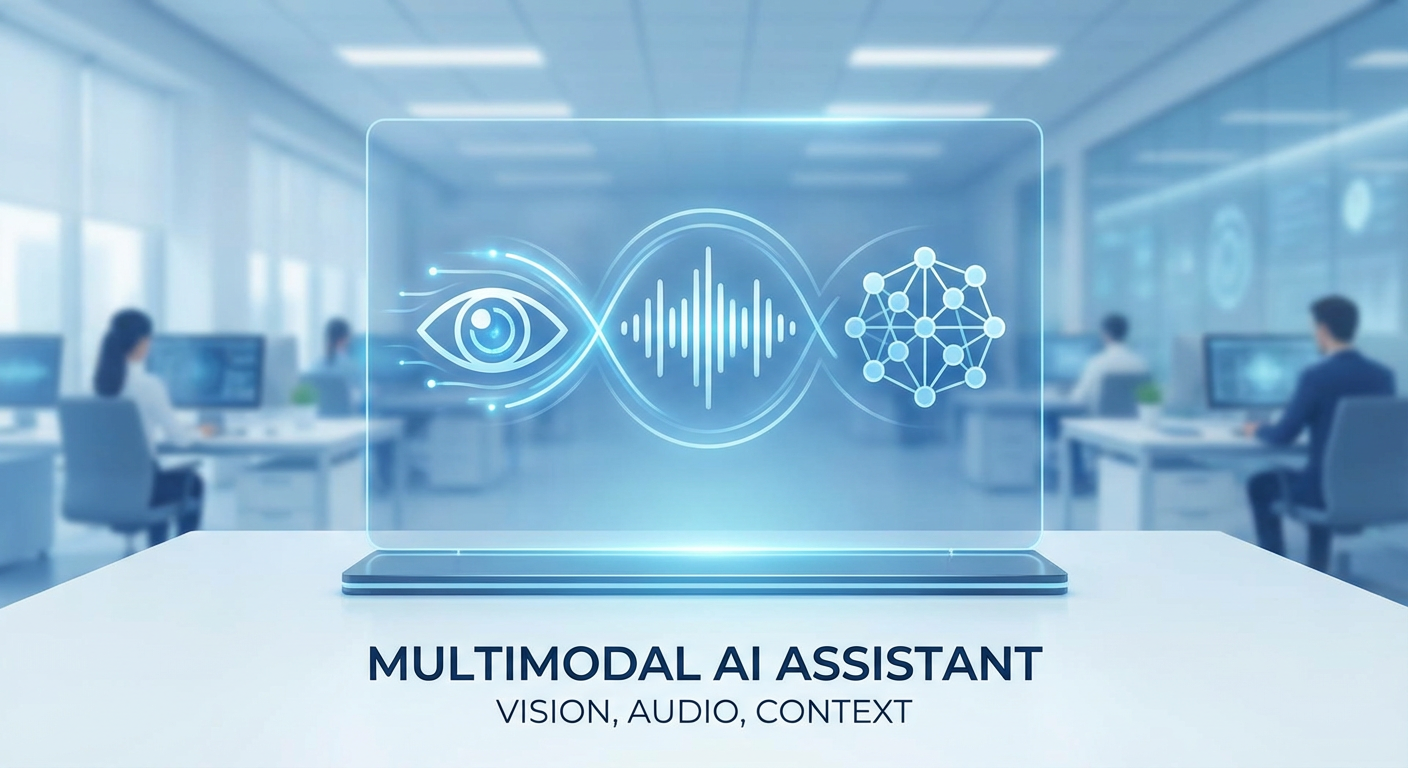
Multimodal AI assistants are advanced artificial intelligence systems that can process and understand information from multiple sources simultaneously—text, images, audio, video, and even data patterns. Think of them as the difference between reading a recipe (text-only AI) versus watching a cooking show where you see the techniques, hear the explanations, and understand the context (multimodal AI).
These assistants use sophisticated neural networks that have been trained on diverse datasets spanning different media types. When you interact with a multimodal AI, it doesn't just analyze your words—it considers your tone of voice, the images you've shared, previous conversations, and the broader context of your request.
For business owners and marketing directors, this means you can finally have an AI partner that truly understands your needs without requiring you to break down every request into rigid, specific commands. You can show it a competitor's advertisement, ask what makes it effective, and receive insights based on visual design, messaging, and market positioning—all at once.
How Multimodal AI Differs from Traditional AI Tools
Traditional AI tools typically specialize in one domain. You might use ChatGPT for writing, DALL-E for images, or speech recognition software for transcription. Each tool exists in its own ecosystem, requiring you to manually connect the dots between different outputs.
Multimodal AI assistants break down these barriers. According to recent research from Stanford's AI Index Report 2025, multimodal models have shown a 47% improvement in task completion accuracy compared to single-mode AI systems when dealing with complex business scenarios.
Here's what sets multimodal AI apart:
Contextual Awareness: These assistants remember previous interactions across different formats. If you showed it a product photo yesterday and ask about pricing strategies today, it connects both pieces of information.
Cross-Modal Understanding: They can answer questions about an image using text, generate visuals based on voice commands, or create written reports from video content.
Reduced Friction: Instead of switching between multiple tools, you have one interface that handles diverse tasks, saving time and reducing the learning curve for your team.
Real-World Applications for Marketing and Business
The practical applications of multimodal AI assistants are transforming how businesses operate. Let's explore specific use cases that directly impact your bottom line.
Content Creation and Campaign Development
Imagine briefing your AI assistant by showing it your product, describing your target audience verbally, and sharing examples of ads you admire. The assistant can then generate comprehensive campaign concepts that incorporate visual elements, ad copy, and strategic recommendations—all tailored to your specific context.
Companies like Coca-Cola have already implemented multimodal AI systems to analyze consumer reactions across social media, combining image recognition (to identify product placement), sentiment analysis from text comments, and video analysis to understand emotional responses. This comprehensive approach resulted in a 23% improvement in campaign targeting accuracy, according to their 2024 marketing technology report.
Customer Service Enhancement
Multimodal AI assistants can revolutionize your customer service by understanding customer issues through multiple channels simultaneously. When a customer sends a photo of a damaged product along with a voice complaint, the AI doesn't just process these separately—it understands the complete context and can provide more accurate, empathetic responses.
According to Gartner's 2025 Customer Service Technology Survey, businesses using multimodal AI for customer support reported a 38% reduction in resolution time and a 31% increase in customer satisfaction scores.
Market Research and Competitor Analysis
You can show your multimodal AI assistant competitor websites, advertisements, social media posts, and product videos, then ask for comprehensive analysis. The AI examines visual branding, messaging tone, audience engagement patterns, and market positioning—delivering insights that would take a human analyst days to compile.
Key Technologies Behind Multimodal AI
Understanding the technology helps you make informed decisions about implementation. Multimodal AI assistants rely on several cutting-edge technologies working in concert:
Transformer Architecture: These neural networks process different types of input simultaneously, identifying relationships and patterns across modalities. The breakthrough came with models like GPT-4V and Google's Gemini, which can truly "see" and "understand" images while processing text.
Cross-Attention Mechanisms: This technology allows the AI to focus on relevant information across different input types. When you ask about a specific element in an image, cross-attention helps the AI connect your text query with the visual data.
Embedding Spaces: Multimodal systems create unified representations where text, images, and audio exist in the same mathematical space, enabling seamless translation between formats.
You don't need to be a technical expert to leverage these technologies—leading platforms like OpenAI's GPT-4V, Google Gemini, and Anthropic's Claude have made multimodal capabilities accessible through user-friendly interfaces.
Practical Benefits for Small and Medium Businesses
For SMB owners and marketing directors, multimodal AI assistants offer tangible advantages that directly impact efficiency and growth.
Time Savings: Instead of using five different tools for content analysis, image creation, text generation, data interpretation, and voice transcription, you have one assistant handling all tasks. Marketing teams report saving 12-15 hours per week on average, according to a 2025 McKinsey Digital study.
Cost Efficiency: While implementing AI requires investment, multimodal assistants often replace multiple subscriptions and reduce the need for specialized contractors. Small businesses report 30-40% cost savings in their marketing technology stack within six months of implementation.
Improved Decision Making: When your AI can analyze complete context—combining sales data, customer feedback, market trends, and visual content performance—you make better-informed strategic decisions. You're not piecing together insights from disparate sources; you're seeing the complete picture.
Accessibility: These assistants democratize advanced marketing capabilities. You don't need a team of specialists in SEO, graphic design, copywriting, and data analysis. Your multimodal AI can guide you through all these areas with contextual understanding of your specific business.
Choosing the Right Multimodal AI Assistant for Your Business
Not all multimodal AI platforms are created equal. Here's what to consider when selecting a solution:
Integration Capabilities: Does it connect with your existing tools—CRM, email marketing platform, social media management, analytics? Seamless integration prevents data silos and maximizes efficiency.
Industry-Specific Training: Some platforms offer specialized models trained on industry-specific data. A multimodal AI trained on retail data will better understand your e-commerce challenges than a generic model.
Privacy and Security: Ensure the platform complies with data protection regulations relevant to your region (GDPR, CCPA, etc.). Ask about data retention policies and whether your information trains their models.
Scalability: Choose a solution that grows with your business. Can it handle increasing data volumes? Does pricing scale reasonably?
Support and Training: Look for providers offering comprehensive onboarding, training resources, and responsive customer support. The best technology is worthless if your team can't use it effectively.
Top platforms in 2025 include OpenAI's GPT-4V for versatility, Google Gemini for integration with Google Workspace, Microsoft Copilot for enterprise environments, and specialized tools like Jasper AI for marketing-specific multimodal capabilities.
Implementation Strategy: Getting Started
Implementing multimodal AI assistants doesn't require a complete business overhaul. Follow this strategic approach:
Start with a Pilot Project: Choose one specific use case—perhaps social media content creation or customer inquiry analysis. Test the technology on a limited scale, measure results, and refine your approach before expanding.
Train Your Team: Allocate time for team members to experiment with the AI. Create internal guidelines for effective prompting across different modalities. The more your team understands the technology's capabilities, the better results you'll achieve.
Establish Clear Workflows: Define which tasks the AI handles independently, which require human review, and which remain purely human-driven. This clarity prevents confusion and ensures quality control.
Measure and Optimize: Track specific metrics—time saved, content performance, customer satisfaction, conversion rates. Use this data to continuously refine how you leverage the AI.
Stay Updated: Multimodal AI evolves rapidly. Allocate time each month to explore new features and capabilities. Subscribe to industry newsletters and join communities where professionals share implementation strategies.
Potential Challenges and How to Overcome Them
Every technology presents challenges. Being prepared helps you navigate obstacles successfully.
Learning Curve: Your team might feel overwhelmed initially. Solution: Provide structured training, celebrate small wins, and assign an internal champion who becomes the go-to expert.
Quality Inconsistency: AI outputs can vary in quality. Solution: Implement review processes, create prompt libraries of what works well, and maintain human oversight for critical communications.
Data Privacy Concerns: Clients and customers might worry about how AI uses their information. Solution: Be transparent about your AI usage, ensure compliance with regulations, and never input sensitive customer data without proper safeguards.
Over-Reliance Risk: Teams might depend too heavily on AI, losing critical thinking skills. Solution: Use AI as an assistant, not a replacement. Encourage team members to question AI outputs and apply human judgment.
Integration Complexity: Connecting AI with existing systems can be technically challenging. Solution: Work with experienced implementation partners or choose platforms with robust integration support and documentation.
The Future of Multimodal AI in Business
The trajectory of multimodal AI assistants points toward even more sophisticated capabilities. Industry experts predict several trends for 2025-2027:
Emotional Intelligence: Next-generation systems will better understand emotional context from voice tone, facial expressions in video calls, and sentiment in written communication, enabling more empathetic customer interactions.
Predictive Multimodal Analysis: AI will proactively identify opportunities by analyzing patterns across your visual content, customer communications, and market data—alerting you to trends before competitors notice them.
Personalization at Scale: Multimodal AI will enable hyper-personalized marketing campaigns that adapt messaging, visuals, and delivery channels based on individual customer preferences and behaviors across multiple touchpoints.
Augmented Creativity: Rather than replacing human creativity, these assistants will enhance it—understanding your creative vision across sketches, mood boards, verbal descriptions, and reference materials to help bring ideas to life faster.
According to IDC's Worldwide AI Forecast 2025, businesses investing in multimodal AI capabilities now will see a 3.5x return on investment by 2027 compared to those maintaining traditional single-mode AI systems.
Privacy, Ethics, and Responsible Use
As you implement multimodal AI assistants, maintaining ethical standards protects your brand and builds customer trust.
Transparency: Inform customers when they're interacting with AI rather than humans. This honesty builds credibility and manages expectations appropriately.
Data Minimization: Only input data necessary for the task at hand. Avoid uploading sensitive customer information, financial records, or proprietary business strategies to third-party AI platforms without proper security measures.
Bias Awareness: AI systems can perpetuate biases present in their training data. Regularly audit AI outputs for potential bias in demographic representation, language, or recommendations.
Human Accountability: Maintain human responsibility for decisions made with AI assistance. The technology should inform your choices, not make them independently.
Continuous Monitoring: Establish processes to review how your team uses AI, ensuring alignment with your company values and legal obligations.
Measuring Success: Key Performance Indicators
To justify your investment in multimodal AI assistants, track these meaningful metrics:
Efficiency Metrics: Time saved on content creation, customer service response times, research and analysis hours reduced.
Quality Metrics: Customer satisfaction scores, content engagement rates, conversion rate improvements, error reduction in communications.
Financial Metrics: Cost per lead, customer acquisition costs, revenue per marketing dollar spent, overall marketing ROI.
Innovation Metrics: Number of new campaign concepts tested, speed of market response, competitive positioning improvements.
Create a baseline before implementation and measure monthly progress. Most businesses see measurable improvements within 60-90 days of strategic multimodal AI adoption.
Conclusion: Your Next Steps Toward Multimodal AI
Multimodal AI assistants represent a fundamental shift in how businesses interact with technology. By understanding and processing complete context across vision, audio, and text, these systems enable smarter decisions, more efficient operations, and more engaging customer experiences.
The key insights to remember: Start with specific use cases rather than trying to transform everything at once. Choose platforms that integrate well with your existing tools. Train your team thoroughly and maintain human oversight. Measure results continuously and refine your approach.
The competitive landscape of 2025 increasingly favors businesses that leverage complete-context AI capabilities. Those who can analyze customer needs across multiple dimensions, create compelling multimodal content, and respond with contextual intelligence will outpace competitors still using fragmented, single-mode AI tools.
Ready to explore how multimodal AI assistants can transform your marketing and business operations? Start by identifying one challenge in your current workflow where complete context understanding would make a significant difference. Download our free "Multimodal AI Implementation Checklist" to guide your journey, or schedule a consultation with our team to discuss how these technologies can specifically benefit your business. The future of AI isn't just about processing information—it's about truly understanding context, just like the best human assistants do.