Introduction
Every marketer dreams of creating that one video that goes viral—the Reel that gets millions of views, the TikTok that sparks a trend, or the Short that drives massive traffic to your business. But what separates viral content from videos that barely get noticed? The answer increasingly lies in artificial intelligence. Platforms like TikTok, Instagram, and YouTube use sophisticated AI algorithms to determine which videos deserve massive reach, and now, marketers can harness similar AI technology to predict and engineer virality before hitting publish. In this comprehensive guide, you'll discover exactly how AI predicts virality for your Reels, Shorts, and TikToks, which tools you can use today, and actionable strategies to leverage these insights for your marketing campaigns.
Understanding How Social Media Algorithms Actually Work
Before diving into AI prediction tools, you need to understand what these platforms are looking for. Social media algorithms aren't random—they're sophisticated AI systems designed to maximize user engagement and platform time.
TikTok's "For You Page" algorithm analyzes over 200 ranking signals, including video completion rate, rewatches, shares, comments, and even the speed at which users engage with your content. Instagram Reels prioritizes similar metrics while also considering your historical performance and follower engagement patterns. YouTube Shorts evaluates watch time, click-through rates from thumbnails, and viewer retention curves.
What makes these algorithms particularly complex is their personalization layer. The same video might go viral for one demographic while completely flopping for another. AI analyzes individual user behavior patterns—what they watch, how long they watch, what they skip—to create unique content feeds for billions of users simultaneously.
According to a 2024 study by Hootsuite, videos that maintain 70% viewer retention in the first three seconds are 3.5 times more likely to be promoted by platform algorithms. This means AI is making split-second decisions about your content's virality potential based on early engagement signals.
How AI Predicts Virality: The Core Mechanisms
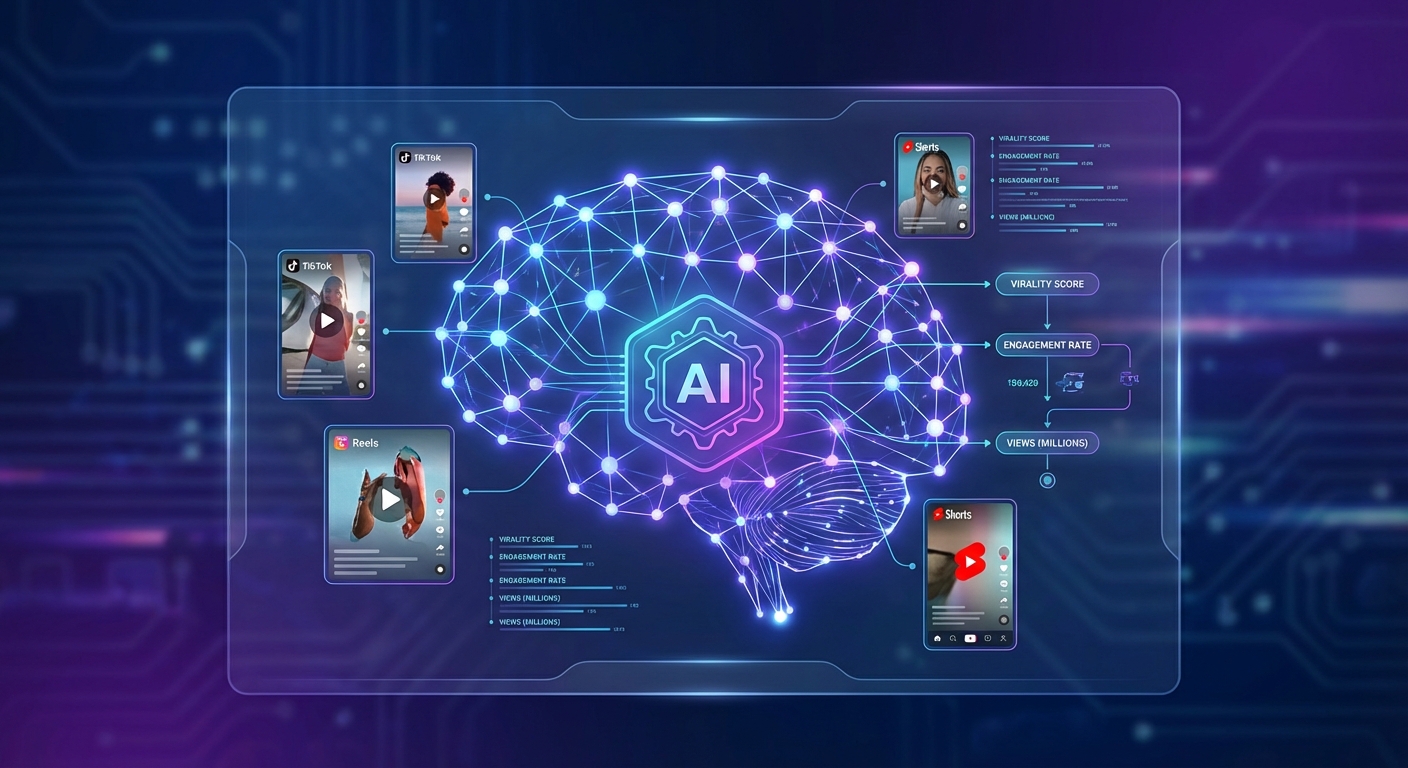
Artificial intelligence predicts virality by analyzing patterns across millions of successful videos and identifying common characteristics. Modern AI prediction tools use several sophisticated approaches to forecast which content will resonate.
Pattern Recognition and Historical Data Analysis forms the foundation. AI systems analyze hundreds of thousands of viral videos to identify patterns in thumbnails, opening hooks, editing styles, audio choices, caption formats, and posting times. Machine learning models then compare your content against these successful patterns to generate virality scores.
Natural Language Processing (NLP) evaluates your captions, on-screen text, and even spoken words in videos. AI determines if your messaging aligns with trending topics, emotional triggers, and language patterns that historically drive engagement. Tools like Lately.ai can analyze your script before filming and predict engagement potential based on linguistic patterns.
Computer Vision Technology examines visual elements frame-by-frame. AI identifies faces, objects, colors, composition, motion speed, and transitions. Research from Stanford University in 2024 revealed that videos with human faces in the first frame receive 38% higher engagement rates—a pattern AI can instantly detect and flag.
Engagement Velocity Prediction uses early performance metrics to forecast final reach. Within the first hour of posting, AI algorithms can analyze initial engagement rates, shares-to-views ratios, and completion percentages to predict if your video will reach 10,000 views or 10 million.
AI-Powered Tools That Predict Viral Potential
Several platforms now offer AI-driven virality prediction specifically for short-form video content. These tools have become essential for marketing teams looking to maximize ROI on content creation.
Predis.ai analyzes your video content before publishing and provides a virality score based on trending audio, visual hooks, pacing, and caption optimization. Their AI compares your content against current viral benchmarks and suggests specific improvements. Marketing teams at companies like Shopify have reported 40% higher engagement rates after implementing Predis.ai recommendations.
Kapwing's AI Video Analyzer examines retention curves, identifies drop-off points, and suggests re-edits to improve algorithmic performance. The platform uses machine learning trained on over 2 million viral videos to pinpoint exactly where viewers lose interest.
VidIQ and TubeBuddy (primarily for YouTube Shorts) offer predictive analytics that forecast view counts, engagement rates, and subscriber growth potential. Their AI evaluates thumbnail effectiveness, title optimization, and content relevance against trending topics in your niche.
Cortex specializes in visual content optimization, using computer vision AI to analyze which visual elements, colors, and compositions perform best for your specific audience. Their technology has helped brands like Marriott and IBM increase social media engagement by 30-50%.
Creatorly AI takes a different approach by generating content ideas with built-in virality predictions. The platform analyzes current trends, audience preferences, and competitive content to suggest video concepts with the highest likelihood of algorithmic promotion.
According to a 2024 Gartner report, 67% of enterprise marketing teams now use some form of AI-powered content prediction tool, up from just 23% in 2022.
Key Metrics AI Analyzes to Predict Success
When AI evaluates your content's viral potential, it focuses on specific quantifiable metrics that correlate with algorithmic promotion. Understanding these metrics helps you create content strategically.
Hook Strength (0-3 Second Retention): AI analyzes whether your opening frame and first three seconds contain pattern-interrupts, emotional triggers, or curiosity gaps that prevent scrolling. Videos with strong hooks show 80%+ retention in this critical window.
Average Watch Time Percentage: Algorithms heavily weight how much of your video people actually watch. AI can predict this by analyzing pacing, content density, and story structure. Videos maintaining 60%+ average view duration receive exponentially more reach.
Engagement Rate Velocity: Beyond total engagement, AI measures how quickly interactions occur. A video gaining 1,000 likes in 10 minutes signals much stronger virality potential than the same number spread over 10 hours.
Save and Share Rates: These are golden metrics. According to Instagram's own statements, saves and shares indicate high-value content that users want to revisit or spread. AI prediction tools analyze elements that historically drive these behaviors—educational content, inspirational messaging, or highly relatable humor.
Comment Sentiment and Quantity: Modern AI doesn't just count comments but analyzes their sentiment and depth. Videos sparking genuine conversation (longer comments, back-and-forth replies) receive algorithmic boosts over those generating simple emoji reactions.
Audience Relevance Score: AI compares your content against the specific interests and behaviors of your existing followers and broader target demographics. Content mismatches—even if objectively high-quality—won't achieve virality with the wrong audience.
Practical Strategies: Using AI Insights to Engineer Virality
Understanding AI prediction is valuable, but implementation drives results. Here's how to apply these insights to your content creation workflow.
Pre-Production Analysis: Before filming, use AI script analyzers to evaluate your concept. Tools like Copy.ai and Jasper now include virality scoring for video scripts. Test multiple hook variations and let AI identify the strongest opener. Brands like Later Media test 5-7 different hooks using AI before selecting their final version.
Thumbnail and Opening Frame Optimization: Upload potential thumbnails to AI analysis tools that evaluate visual appeal, emotion conveyance, and click-worthiness. Since many platforms autoplay without sound, your visual first impression determines scroll-stopping power.
Real-Time Editing Adjustments: Modern editing platforms like Descript and CapCut now include AI features that identify pacing issues, recommend cut points, and suggest transitions based on viral video patterns. Use these suggestions to tighten your content and maintain engagement.
Audio Selection Intelligence: AI tools can now predict which trending audio clips have staying power versus those already peaking. Choosing audio on the upward trend curve—not the peak—gives your content longer relevance. Platforms like Soundraw offer AI-powered audio recommendations based on your content style and current trends.
Optimal Posting Time Prediction: AI analyzes when your specific audience is most active and most likely to engage quickly (providing that crucial early velocity). Tools like Hootsuite and Buffer use machine learning to recommend posting times personalized to your follower behavior, not generic "best times."
A/B Testing with AI: Create multiple versions of the same concept with variations in hooks, captions, or visual styles. AI can predict which version will perform better before you post both, allowing you to allocate your posting schedule strategically.
A case study from cosmetics brand e.l.f. Beauty revealed that implementing AI-driven content optimization increased their TikTok engagement rate from 4.2% to 11.7% over six months, with three videos exceeding 50 million views.
The Science Behind Viral Hooks: What AI Has Learned
Through analysis of millions of viral videos, AI has identified specific hook patterns that consistently outperform others. These aren't creative guidelines—they're data-proven formulas.
The Pattern Interrupt: AI identifies that videos starting with unexpected visuals, sounds, or statements achieve 73% higher retention. Examples include sudden movement, surprising statements, or visual contradictions that force cognitive engagement.
The Open Loop: Starting with a question, partial reveal, or promise of payoff creates curiosity gaps. AI analyzes how long viewers stay engaged when anticipating resolution. Videos with effective open loops maintain engagement 2.3x longer than those without.
The Relatable Moment: Content beginning with "POV:" or "When…" scenarios that mirror viewer experiences trigger immediate emotional connection. AI sentiment analysis shows these formats generate 40% more comments and shares.
The Value Proposition: Direct hooks like "3 ways to…" or "How to [desired outcome]" perform exceptionally well in professional and educational niches. AI identifies that clarity often outperforms cleverness, especially for business-focused content.
The Trending Participation: Jumping on trending formats, challenges, or audio while adding unique value creates familiarity plus novelty. AI can detect trend lifecycle stages and recommend optimal entry timing.
Potential Risks and Limitations of AI-Predicted Content
While AI provides powerful insights, over-reliance creates potential pitfalls that smart marketers must navigate.
Homogenization of Content: When everyone uses the same AI recommendations, content becomes formulaic and indistinguishable. Algorithms actually penalize repetitive content patterns, so blind adherence to AI suggestions without creative differentiation can backfire.
Loss of Brand Authenticity: AI optimizes for engagement, not necessarily brand alignment. A video might score high on virality metrics while completely missing your brand voice or values. Maintain editorial oversight to ensure AI-optimized content still represents your authentic message.
Algorithm Dependency Risk: Platforms constantly update their algorithms. Content strategies built entirely on current AI predictions may fail when platforms shift priorities. Diversify your approach and build genuine audience relationships beyond algorithmic reach.
Data Privacy Concerns: Some AI tools require access to your social media accounts and analytics. Ensure any platform you use complies with data protection regulations and clearly states how they use your information.
False Confidence in Predictions: AI provides probabilities, not guarantees. A 90% virality score doesn't ensure success. External factors—news events, platform changes, competitive content—can dramatically impact results regardless of AI predictions.
A balanced approach uses AI as a guide while maintaining creative intuition and brand integrity. The most successful marketers view AI as a collaborator, not a replacement for strategic thinking.
Measuring Success: Beyond the Vanity Metrics
AI can predict virality, but smart marketers measure what matters for business outcomes. Not all viral content drives actual value.
Conversion Tracking: Views are meaningless without conversions. Use UTM parameters, bio link tracking, and platform-specific conversion pixels to measure how viral content drives website traffic, lead generation, or sales.
Audience Quality Metrics: Analyze follower demographics of users gained from viral content. Are they your target market, or just passive viewers attracted to entertainment? Tools like Socialbakers provide AI-powered audience quality scoring.
Brand Lift Analysis: Survey your audience to measure awareness, perception, and intent changes following viral campaigns. Platforms like Brandwatch use AI to analyze sentiment shifts and brand association changes.
Content Efficiency Ratios: Compare production investment versus returns. A video requiring 20 hours of production that goes viral might generate lower ROI than simpler content with moderate reach but higher conversion rates.
Long-Term Engagement Patterns: Viral spikes mean little if new followers don't engage with subsequent content. AI analytics tools can predict and measure how viral content affects your baseline engagement rates over time.
The Future of AI and Viral Content Prediction
The AI content prediction landscape is evolving rapidly. Understanding emerging trends helps you stay ahead of competitors.
Real-Time Generative AI: Tools emerging in 2025 can generate, optimize, and publish video content with minimal human input. Platforms like Synthesia and Runway ML are developing AI that creates entire videos from text prompts while automatically optimizing for virality.
Predictive Audience Segmentation: Advanced AI will soon predict not just if content will go viral, but exactly which audience segments will drive that virality, allowing micro-targeted content variations.
Cross-Platform Optimization: New AI tools analyze how to adapt single content pieces for optimal performance across TikTok, Instagram, YouTube, and emerging platforms simultaneously, maximizing reach efficiency.
Emotion AI and Biometric Testing: Companies like Affectiva are developing AI that predicts emotional responses to content by analyzing facial expressions and physiological responses in test audiences before public release.
Ethical AI Content Flagging: As concerns about misinformation grow, AI systems are being developed to predict not just virality but also content risk factors, helping brands avoid potentially controversial or harmful viral moments.
According to Forrester Research, by 2027, 85% of brand social content will involve AI assistance at some stage of creation, optimization, or distribution.
Conclusion: Balancing AI Intelligence with Human Creativity
Cracking the algorithm through AI prediction isn't about gaming the system—it's about understanding what truly resonates with audiences and optimizing your creative expression for maximum impact. The platforms' AI algorithms and the prediction tools you use are ultimately measuring the same thing: genuine human engagement and value.
You now understand how AI predicts virality for your Reels, Shorts, and TikToks by analyzing patterns in successful content, evaluating specific metrics like hook strength and retention rates, and forecasting engagement velocity. You've learned about practical tools like Predis.ai, Kapwing, and Cortex that can score your content before publishing, and strategic approaches to implement these insights throughout your content creation workflow.
The key is finding the sweet spot between data-driven optimization and authentic creativity. Use AI to inform your decisions, test your assumptions, and refine your execution—but never let algorithms replace your unique brand voice and creative vision.
Ready to start creating more predictably viral content? Begin by selecting one AI prediction tool from this guide and analyzing your last ten videos. Identify patterns in what worked versus what didn't, then apply those insights to your next content piece. Track the results, refine your approach, and watch your engagement metrics transform.
For ongoing insights on AI-powered marketing strategies and emerging social media trends, subscribe to our newsletter for weekly actionable tips delivered directly to your inbox. Your next viral video is waiting to be created—now you have the AI tools to make it happen.