Introduction
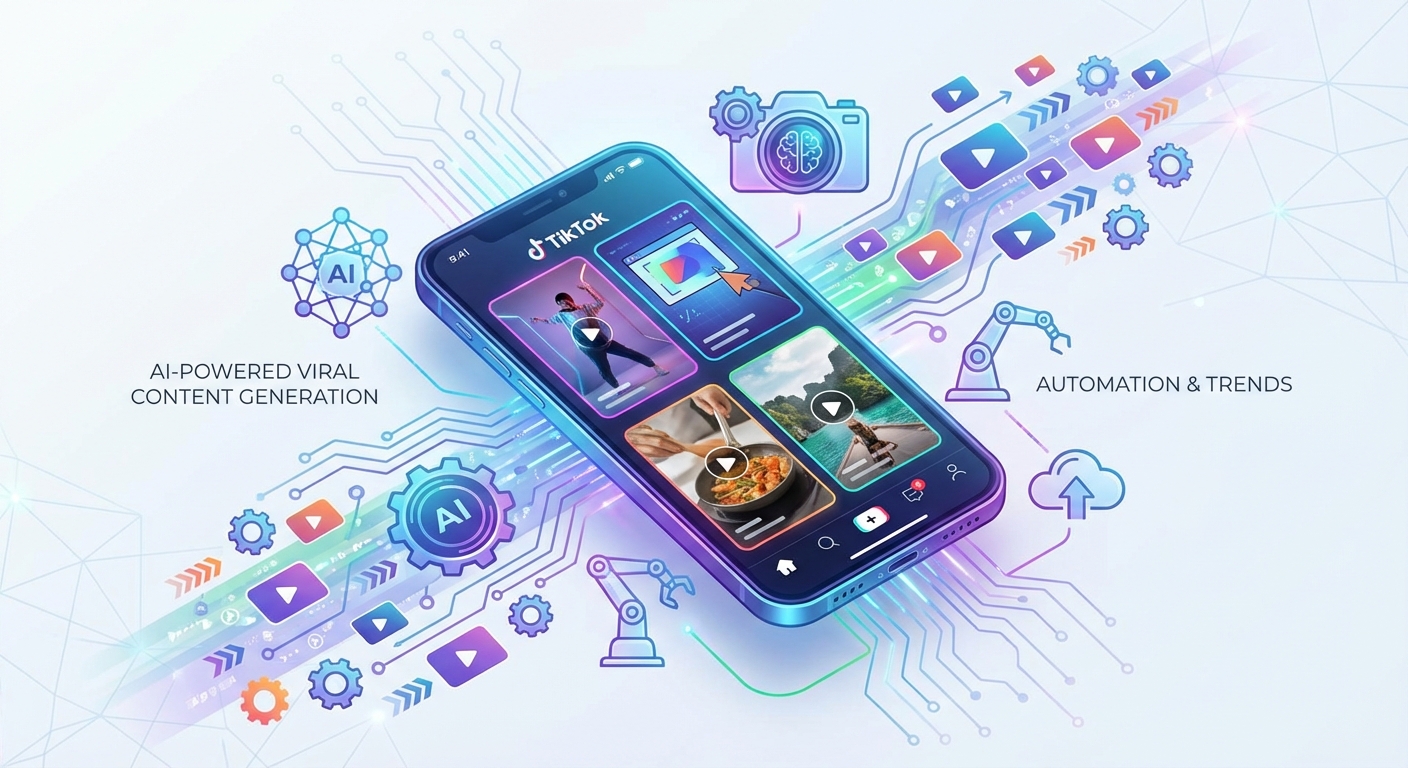
Every marketing director faces the same daunting challenge: TikTok demands constant, high-quality video content to stay competitive. The platform's algorithm favors accounts that post multiple times daily, but traditional video production is expensive, time-consuming, and requires specialized editing skills. What if you could bypass these barriers entirely? The TikTok takeover by AI is transforming how businesses create content, enabling anyone to generate hundreds of viral videos without ever touching editing software. This comprehensive guide reveals how AI video generation works, which tools deliver real results, and how you can implement these technologies to scale your marketing efforts exponentially while reducing costs and time investment.
Why TikTok Demands a New Content Strategy
TikTok has fundamentally altered the social media landscape. With over 1.9 billion monthly active users in 2025 according to DataReportal, the platform represents an unprecedented opportunity for brand visibility. However, success on TikTok requires a content volume that traditional marketing teams simply cannot sustain.
The platform's algorithm prioritizes fresh content and consistent posting schedules. Brands that post 3-5 times daily see engagement rates up to 400% higher than those posting once per day, according to recent research from HubSpot. For small and medium businesses with limited resources, this creates an impossible bottleneck.
This is where AI video generation becomes a game-changer. Instead of spending hours filming and editing a single video, you can now produce dozens of variations in minutes. This shift from quality-over-quantity to high-volume testing allows you to discover what resonates with your audience through rapid experimentation rather than guesswork.
Understanding How AI Generates Videos
AI video generation might seem like magic, but understanding the core technology helps you leverage it effectively. Modern AI tools use several sophisticated approaches to transform simple inputs into polished video content.
Text-to-Video Conversion: This is the foundation of most AI video tools. You provide text—a script, product description, or blog post—and the AI analyzes the content to determine visual elements. The system automatically selects relevant stock footage, generates AI imagery, or creates animations that match your message. Advanced tools like Pictory and InVideo can even identify key sentences and create visual emphasis automatically.
Automated Video Editing: AI handles the technical aspects that typically require professional skills. The technology automatically syncs visuals to audio, applies transitions between scenes, adjusts timing for maximum impact, and even color-corrects footage. Tools like Runway ML and Descript use machine learning models trained on millions of professional videos to understand what makes content engaging.
AI Avatar Technology: Platforms such as Synthesia and HeyGen create realistic digital presenters. You simply input a script, select an avatar, and the AI generates a video of a person speaking your words with natural gestures and lip-sync. This eliminates the need for on-camera talent, studio time, and multiple takes.
Voice Synthesis and Cloning: Modern AI can generate natural-sounding voiceovers in multiple languages and accents. Some tools even allow you to clone your own voice, enabling you to create narrated content without recording sessions.
These technologies work together to compress hours of production work into minutes of simple text input and parameter selection.
Top AI Tools Transforming TikTok Content Creation
Choosing the right tool depends on your specific content needs, budget, and technical comfort level. Here are the most effective AI platforms for TikTok marketing in 2025.
Opus Clip: Specifically designed for repurposing long-form content into viral shorts. Upload a podcast, webinar, or YouTube video, and Opus Clip's AI identifies the most engaging segments, automatically crops them for vertical format, adds captions, and generates multiple TikTok-ready clips. Pricing starts at $9.50/month for 150 minutes of processing.
CapCut AI: TikTok's own AI-powered editing app has become increasingly sophisticated. Its AI script-to-video feature generates complete videos from text prompts, while the auto-caption and voice effects tools enhance accessibility and engagement. The platform is free, making it ideal for small businesses testing AI video creation.
InVideo AI: This comprehensive platform excels at prompt-based video generation. Simply describe the video you want—"Create a 15-second TikTok showcasing eco-friendly packaging benefits with upbeat music"—and the AI builds the entire video. Plans start at $25/month for 50 AI-generated videos.
Pictory: Best for content repurposing. Pictory transforms blog posts, articles, and written content into engaging videos by extracting key points and matching them with relevant visuals from its extensive stock library. This is particularly valuable for B2B companies with existing written content libraries.
Synthesia: The premium choice for avatar-based content. While more expensive (starting at $22/month), Synthesia creates incredibly realistic presenter videos in over 120 languages. This is ideal for educational content, product demonstrations, and multilingual marketing campaigns.
Strategic Applications: How Businesses Are Winning with AI
Real-world implementation reveals the true power of AI video generation. Here's how different business types are leveraging these tools.
E-commerce Product Showcases: An online fashion retailer used InVideo AI to create 50+ product videos weekly. By inputting product descriptions and benefits, the AI generated dynamic videos featuring the items with trending music and text overlays. Their TikTok following grew from 5,000 to 127,000 in four months, with a 23% click-through rate to their online store.
Restaurant Marketing: A regional restaurant chain uses CapCut AI daily to create menu item features. Each morning, a manager takes a quick 10-second clip of the daily special, then uses AI to add dynamic captions, trending sounds, and visual effects. This consistent posting strategy increased their average daily foot traffic by 34% according to their internal tracking.
B2B SaaS Education: A project management software company transformed their blog content into educational TikToks using Pictory. By converting complex articles into simple, visual explainers, they reached a younger professional audience. Their cost per lead from TikTok decreased by 56% compared to traditional paid advertising.
Real Estate Virtual Tours: An agency uses AI to transform property photos into dynamic video tours with AI-generated narration describing features. What once took hours per property now takes 10 minutes, allowing them to maintain an active TikTok presence for every listing.
Maximizing AI Video Performance: Advanced Strategies
Generating videos is only half the equation. Optimizing them for virality requires strategic thinking that AI can also support.
Trend Integration: Use AI-powered social listening tools like Brandwatch or Sprout Social to identify trending sounds, hashtags, and formats in real-time. When a trend emerges, you can quickly generate relevant content using your AI video tool, positioning your brand at the forefront of conversations rather than trailing behind.
A/B Testing at Scale: Traditional video production makes testing prohibitively expensive. With AI, you can generate 10 variations of the same message with different hooks, visuals, or calls-to-action. Post them at staggered times and let TikTok's algorithm identify which performs best. This data-driven approach eliminates guesswork.
Personalization and Localization: AI tools can generate variations of the same video for different audience segments. Synthesia allows you to create the same message in multiple languages with culturally appropriate avatars. InVideo can adjust visual themes to match regional preferences.
Caption Optimization: AI writing assistants like ChatGPT or Claude can generate dozens of caption variations optimized for engagement. Test different caption lengths, question formats, and call-to-action phrases to discover what drives comments and shares.
Navigating the Risks and Limitations
While AI offers tremendous advantages, responsible implementation requires awareness of potential pitfalls and ethical considerations.
Authenticity Concerns: The most significant risk is creating content that feels robotic or generic. TikTok audiences value authenticity, and poorly implemented AI content can damage brand perception. The solution is using AI for production efficiency while maintaining human oversight for strategy and brand voice. Always review and personalize AI-generated content before publishing.
Copyright and Licensing Issues: Some AI tools generate content using copyrighted material. Ensure your chosen platform provides proper licensing for all stock footage, music, and images. Read terms of service carefully, particularly regarding commercial use rights.
Over-Reliance on Automation: AI should augment human creativity, not replace it entirely. The most successful brands use AI to handle 70-80% of production work while reserving strategic decisions, brand alignment, and creative direction for human team members.
Quality Control: Not every AI-generated video will be perfect. Establish a review process to catch errors, inappropriate content pairings, or off-brand messaging before publication. This is especially critical when using fully automated workflows.
Transparency and Disclosure: As AI-generated content becomes more sophisticated, particularly with avatars and deepfakes, ethical marketing requires transparency. Consider disclosing when content uses AI-generated presenters, especially in highly regulated industries.
Measuring Success and ROI
Implementing AI video generation requires measuring its impact on your marketing objectives. Focus on these key performance indicators.
Production Efficiency Metrics: Track time saved per video, cost reduction compared to traditional production, and volume of content produced. Most businesses report 60-80% time savings and 50-70% cost reduction.
Engagement Metrics: Monitor views, likes, comments, shares, and watch time. AI-generated content should match or exceed your traditional content's performance. If it underperforms, refine your prompts and increase human oversight.
Conversion Metrics: Ultimately, TikTok content should drive business results. Track click-through rates to your website, lead generation, coupon redemptions, or sales attributed to TikTok. Use UTM parameters and TikTok's pixel to accurately measure ROI.
Audience Growth: Measure follower growth rate and audience demographics. AI's ability to produce high volumes of content should accelerate your account growth if content quality remains high.
Getting Started: Your Implementation Roadmap
Ready to leverage AI for your TikTok strategy? Follow this practical roadmap.
Week 1 - Research and Testing: Start with free trials of 2-3 AI video tools. Create 10 test videos using each platform to evaluate ease of use, output quality, and fit with your brand. CapCut AI is free and provides an excellent starting point.
Week 2 - Strategy Development: Define your content pillars, posting schedule, and success metrics. Decide which types of content (product features, educational tips, behind-the-scenes, etc.) will benefit most from AI automation.
Week 3 - Workflow Creation: Establish a content production workflow. Who inputs prompts? Who reviews outputs? Who publishes? Document this process to ensure consistency as you scale.
Week 4 - Launch and Iterate: Begin publishing AI-generated content alongside your traditional content. Monitor performance closely and adjust your approach based on data. Experiment with different AI tools for different content types.
Ongoing - Optimization: Continuously refine your prompts, test new features, and stay updated on AI tool developments. The technology evolves rapidly, and new capabilities emerge regularly.
Future Trends: What's Next for AI Video Marketing
The AI video generation landscape is evolving at breakneck speed. Understanding emerging trends helps you stay ahead of competitors.
Real-Time Personalization: Future AI tools will generate personalized video content for individual viewers based on their preferences, behavior, and demographics. This hyper-personalization will dramatically increase conversion rates.
Interactive AI Videos: Emerging technologies will allow viewers to interact with AI-generated content, choosing storylines, asking questions, and receiving customized responses within the video itself.
Advanced Emotion Recognition: AI will analyze viewer reactions in real-time, learning which emotional triggers drive engagement and automatically optimizing future content for maximum impact.
Seamless Multi-Platform Adaptation: Next-generation tools will automatically reformat and optimize content for every platform simultaneously—TikTok, Instagram Reels, YouTube Shorts—from a single input.
Conclusion: Embracing the AI-Powered Future
The TikTok takeover by AI represents more than just a technological advancement; it's a fundamental democratization of video marketing. Small businesses now have access to content creation capabilities that were previously exclusive to enterprises with substantial production budgets. By leveraging AI to generate hundreds of viral videos without editing skills, you can compete effectively on TikTok regardless of your team size or technical expertise.
The businesses thriving on TikTok in 2025 aren't those with the biggest budgets—they're the ones embracing AI to work smarter. They're testing more, learning faster, and scaling efficiently. The tools, strategies, and examples outlined in this guide provide everything you need to join them.
Ready to transform your TikTok marketing? Download our free "AI Video Generation Starter Checklist" to begin your journey. This comprehensive resource includes tool comparisons, prompt templates, and a 30-day implementation plan. Subscribe to our newsletter for weekly AI marketing insights, exclusive tool reviews, and case studies from businesses achieving remarkable results with AI-generated content. The future of video marketing is here—and it's more accessible than ever.